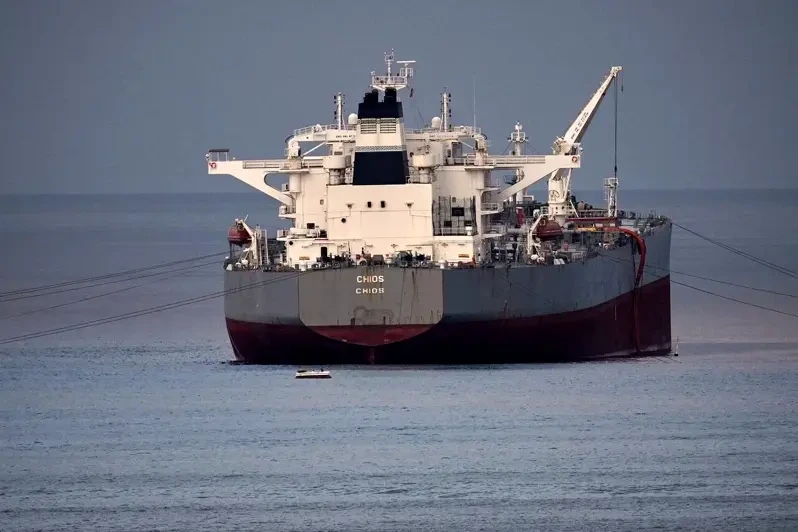
Following an attack that forced the closure of a major Saudi Arabian east-west oil pipeline, the Red Sea port of Yanbu reportedly suspended crude oil loading operations and cancelled some shipments originally scheduled for delivery to Europe in late September. This dealt a fresh blow to global supplies already strained by tensions surrounding the Strait of Hormuz. European buyers scrambled to secure alternative supplies, driving a 4.38% surge in U.S. West Texas Intermediate (WTI) crude on Tuesday—a sharper rise than that of Brent crude.
WTI crude closed at $105.83 per barrel yesterday, while Brent crude rose 2.9% to $108.75; the steeper gain for WTI reflected a shift by European and Asian buyers toward U.S. crude to fill the gap left by disrupted Middle Eastern supplies. However, both benchmarks retreated in early trading on Wednesday, falling 0.54% and 0.46%, respectively.
Saudi Arabia Cancels Some Oil Cargoes
Citing traders, Reuters reported that Saudi Arabia—the world’s largest crude oil exporter—has notified European customers of the cancellation of some crude oil cargoes scheduled for loading in September. Saudi Aramco, the state-owned oil company, declined to comment.
The 1,200-kilometer East-West Pipeline has transported approximately 4 million to 5 million barrels of crude oil daily over the past six months—equivalent to 4% to 5% of global supply—serving as a key alternative route for Middle Eastern crude exports in the event of a closure of the Strait of Hormuz.
According to The Wall Street Journal, while the pipeline might resume partial operations sooner, full repairs could take six to eight weeks, raising the likelihood of Brent crude prices surging past $120 per barrel. However, U.S. Energy Secretary Chris Wright told CNBC on Tuesday that preliminary assessments suggest oil flow could resume within days. Estimates regarding the repair timeline vary significantly among different parties.
Supply Alerts Sound Across Multiple Regions
Supply risks have also emerged in other oil-producing areas. The Petroleum Facilities Guard in Libya—demanding a shift in administrative and financial oversight to the National Oil Corporation (NOC) rather than the Ministry of Defense—has shut a valve on the Hamada-Zawiya pipeline, halting production at the Hamada, Tahara, and NC5 oil fields.
Libya’s NOC has warned that if the valve remains closed or further fields are forced to shut down, it may declare force majeure regarding the affected supplies. However, NOC Chairman Massoud Suleman stated that national production has not yet suffered a significant impact, remaining steady at approximately 1.4 million barrels per day.
Global Buyers Scramble for U.S. Crude
Supply gaps in the Middle East have made U.S. crude increasingly critical, explaining why West Texas Intermediate (WTI) prices have risen more sharply than Brent crude. Even as transoceanic shipping costs soar to record highs, Asian buyers continue to purchase U.S. crude, as the landed cost in Asia remains lower than that of the UAE’s Murban grade.
Citing data from the Baltic Exchange, Bloomberg reported that the charter rate for a Very Large Crude Carrier (VLCC) to transport 2 million barrels of crude from the U.S. Gulf Coast to China climbed to approximately $44.8 million on Tuesday. This marks a record high, representing a significant jump from $39 million the previous day and far exceeding the $17.8 million rate seen in late February, prior to the outbreak of hostilities involving Iran.
Data from Kpler indicates that six VLCCs are already scheduled to load crude from the U.S. Gulf Coast for shipment to Asia in October, with a combined volume of approximately 12 million barrels.